March has arrived on the East Yorkshire coast, bringing an early warmth after a long, wet winter. At 14°C, holiday homes and caravans that have stood quiet for months are being opened up for the new season. People are returning to the beaches, cliffs, and coastal paths to make the most of a dry spring day and our wildlife is sensing the shift.
As human activity increases, so does the chance that we share space more closely with the species that rely on our coastline for rest, recovery, and survival. Among the first to notice this seasonal change are our resident seals.
When a Quiet Cove Meets Curious Visitors
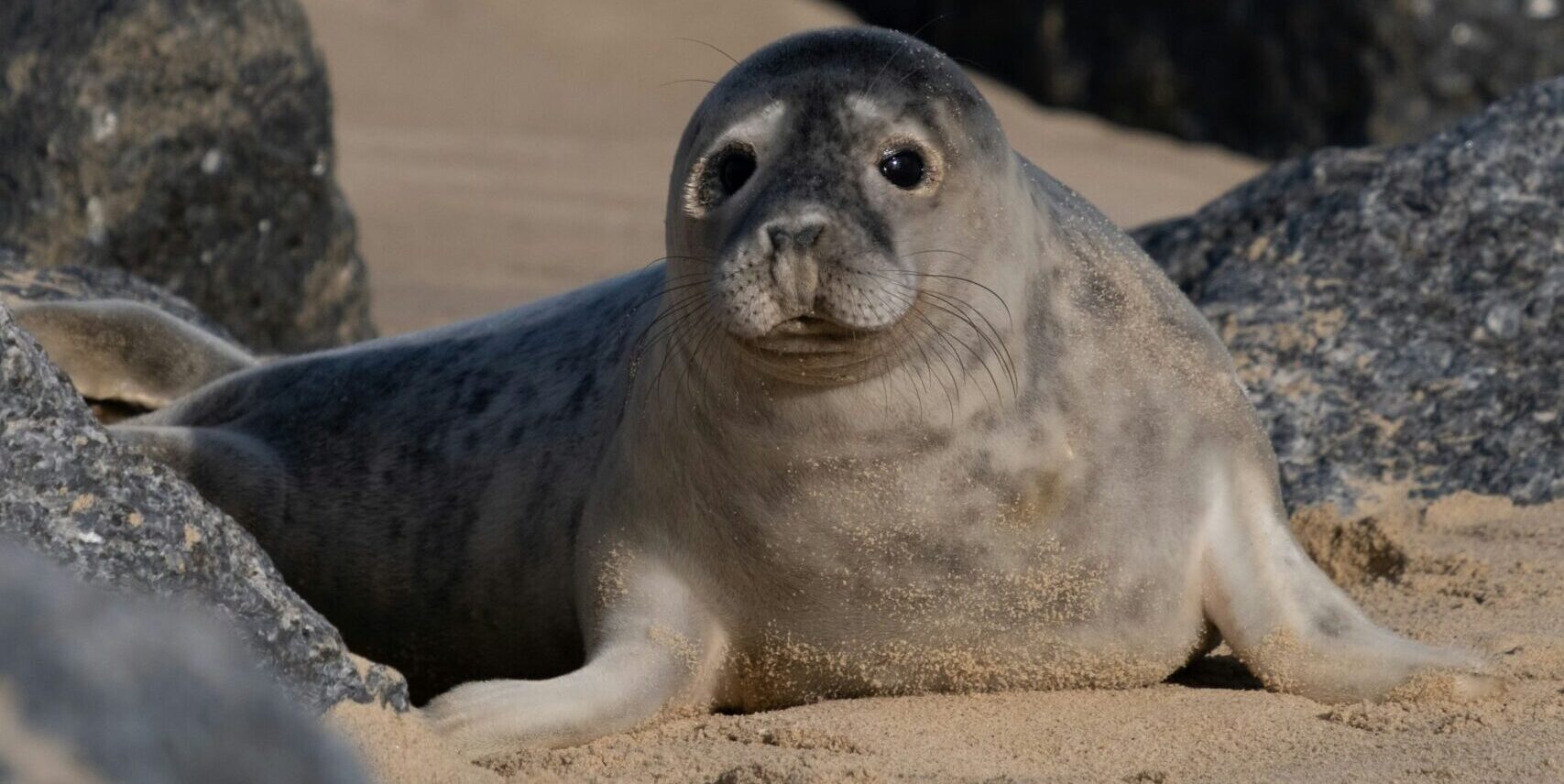
One of our local seal colonies is usually well protected from disturbance. Their cove sits far below the viewing point above, sheltered, quiet, and almost inaccessible to people. It is an ideal place for seals to rest and recover after the breeding season.
But even places that seem naturally protected can sometimes be affected by human activity.
Recently, two visitors made their way down the cliff in the hope of getting a closer look at the seals below. It’s easy to understand the appeal wildlife encounters can be powerful and memorable, and many people hope to experience them a little more closely.
However, this stretch of coastline is one of the fastest eroding in Europe. The ground beneath our feet is not always stable, and moving close to cliff edges can be extremely dangerous. Activity above the cove can also be noticed by the seals resting below.
When seals detect unfamiliar movement or noise, their instinct is to return quickly to the water. To someone watching from above, this sudden movement might seem exciting. For the seals, however, it means using energy they would normally be conserving while resting.
Seals are perfectly adapted for life in the water, but they are slower and more vulnerable on land. When a group moves suddenly toward the sea, animals can become separated, injured, or simply lose valuable resting time.
Often, people are unaware that their presence has caused this reaction. It can happen quietly and quickly which is why understanding how wildlife responds to us is so important.
The Wider Picture: One Moment for Us, Many Moments for Them
The situation described above was shared with us from our founding region, but similar moments can happen anywhere along our coasts where seals haul out to rest.
For visitors, approaching a little closer may feel like a brief moment perhaps just long enough for a photograph or a better view.
But across the course of a day, many short disturbances can add up. If several visitors unknowingly trigger the same response, seals may experience repeated interruptions to their rest.
Over time, these small disruptions can make it harder for animals to recover energy between feeding trips, moulting, breeding, and raising young.
Understanding this cumulative effect helps explain why giving wildlife space makes such a difference.
Sharing the Coast with Care
Most people who visit our coasts want to enjoy wildlife while also protecting it. With a little awareness, it’s entirely possible to do both.
Operation Seabird exists to help people experience our blue spaces responsibly, so that wildlife and visitors can continue to share these places safely.
When visiting coastal areas, a few simple considerations can make a big difference:
– Be aware of your surroundings – cliffs, erosion, unstable ground, sinking sand, and mud can all pose risks.
– Leave nothing but footprints.
– Observe wildlife from a respectful distance and allow animals to remain calm and undisturbed.
– Binoculars or a camera zoom can bring wildlife surprisingly close, allowing seals to rest peacefully while we enjoy the view.
Understanding Disturbance: What the Code Says
The DEFRA Marine and Coastal Wildlife Code provides helpful guidance on how wildlife disturbance can occur and why it matters.
Wildlife may feel disturbed when people:
– approach, move toward, or attempt to touch animals
– crowd, circle, separate, or chase them
– feed them
– create loud or sudden noise
– damage or alter habitats
Dogs can also unintentionally disturb wildlife if they are not kept under effective control.
Repeated disturbance can:
– cause stress or injury
– displace animals from important habitats
– interrupt breeding, resting, feeding, or migration
– increase vulnerability to predators
Knowing when wildlife needs space and responding accordingly helps protect the species that depend on our coastline.
A Shared Coastline
As spring unfolds and more people return to the coast, these moments of awareness become even more valuable.
Our coastline is home to remarkable wildlife, and small choices made by visitors each day help ensure these animals can continue to rest, feed, and raise their young undisturbed.
By observing, appreciating, and giving wildlife space, we help keep these encounters possible for everyone.
To learn more about our work, visit:
www.operationseabird.org
To support our research and help shape future guidance, you can take part in our live survey here:
https://docs.google.com/forms/u/0/d/e/1FAIpQLSfIud4O2iyvW7vZlMek42UpEsZ0i-K07F6HjqUx4F8l4Tvafg/formResponse